
What do you think of when you hear the phrase, “too good to be true?” Immediate skepticism? Do silent alarms go off in the back of your brain? Do you think “scam?” I’ve been thinking about this phrase a lot lately, especially after my experience with Jinshi Bluetooth wireless headphones.
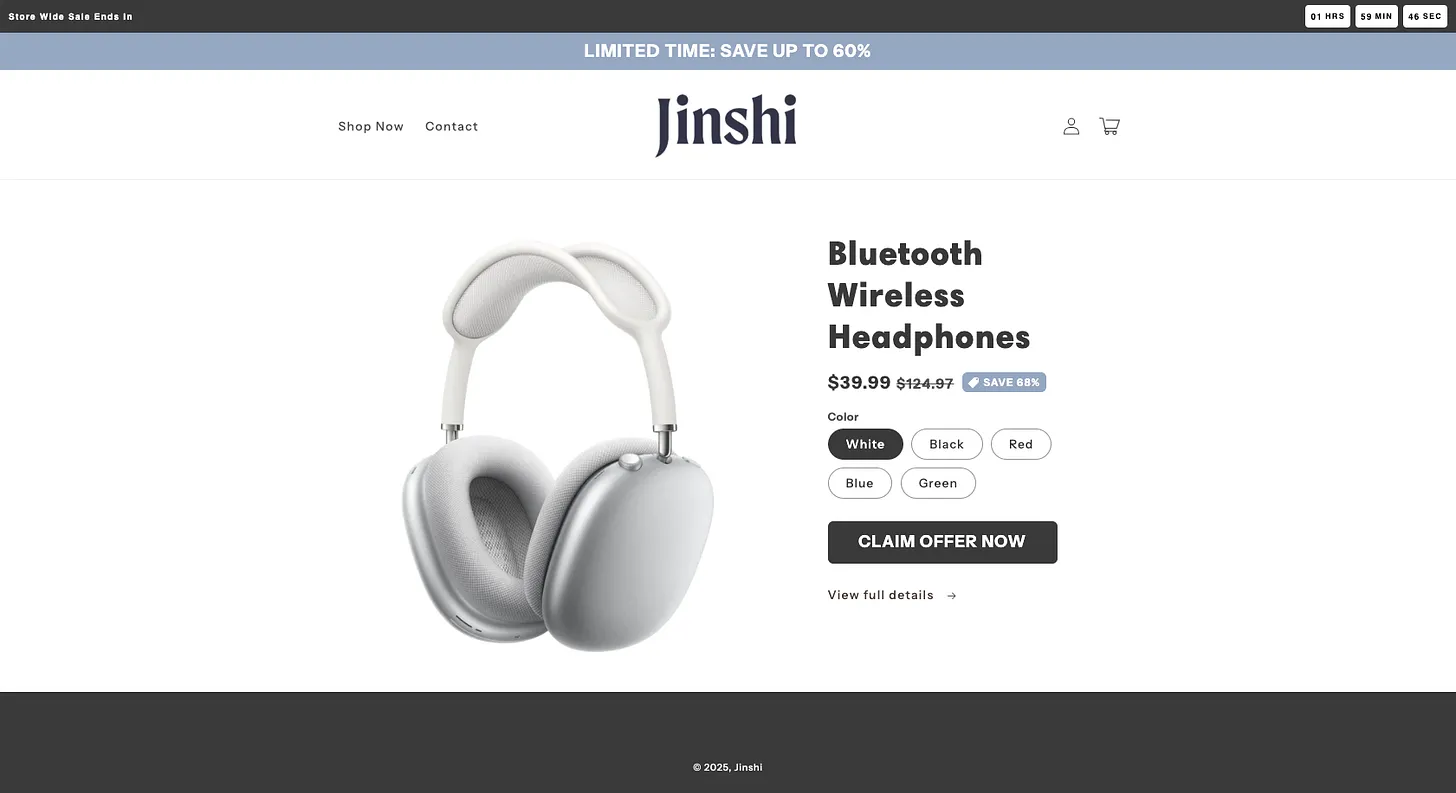
I was getting slammed with ads on social media for the Jinshi headphones. These headphones are marketed as knockoffs of the Apple AirPods Max. Each ad practically begs you to believe you’re getting a bargain. The ads feature the unboxing of the headphones, claiming they are the same headphones made for Apple in the same factory. These video ads are incredibly effective. Who wouldn’t want the sleek look of AirPods Max at a fraction of the price? It’s the kind of deal that makes you pause, maybe even feel a little smug for having found it. I’ll admit, I was tempted.
I conducted no research, and the Jinshi website appeared to be a legitimate storefront. On a whim, I thought, what the hell.
After weeks of seeing a wide variety of the same ads, I foolishly sent the company $40 for two pairs of headphones, thinking I would never see these headphones, get absolute trash, or maybe, just maybe, be pleasantly surprised.
NOTE: I was not “pleasantly surprised.”
When I received confirmation and now shipping emails, I thought, at least I’m going to get something in the mail. Several weeks later, the box arrived, and I could not have been more disappointed. They arrived at my doorstep from a Chicago fulfillment address, which should have been a red flag from the start.
I opened the package and found two boxes of the same headphones. These were not Apple AirPods Max or even AirPods Max in a relatively nondescript box. These were P9 Pro Max headphones.
One of the greatest bait and switches I’ve ever experienced.
These headphones have only a passing resemblance to actual Apple AirPods Max. The moment you pick them up, you notice the weight—or rather, the lack of it. These are cheap, plastic headphones, not even close to the real thing. The mesh on the ear cups? Fake. Just for show. There’s no active noise cancelling, which, honestly, is one of the main reasons anyone would want premium headphones in the first place.
It feels like a child’s toy, and, to be honest, if I’d only paid $9.99 for a pair, they’d make a passable set of Bluetooth headphones for a middle schooler or younger. Otherwise, these headphones are crap.
I suppose there’s a lesson here, but it’s not exactly new: if it looks like a duck, quacks like a duck, but costs a tenth of what a duck should cost… it’s probably not a duck. Or, in this case, not a pair of AirPods Max.
Be seeing you.
Liked this one?
There's a new essay every Saturday, and shorter notes during the week. If you want another one now, start here. Or I can send it Sunday morning along with whatever piled up. Same writing, less remembering.
Porch light's on either way.